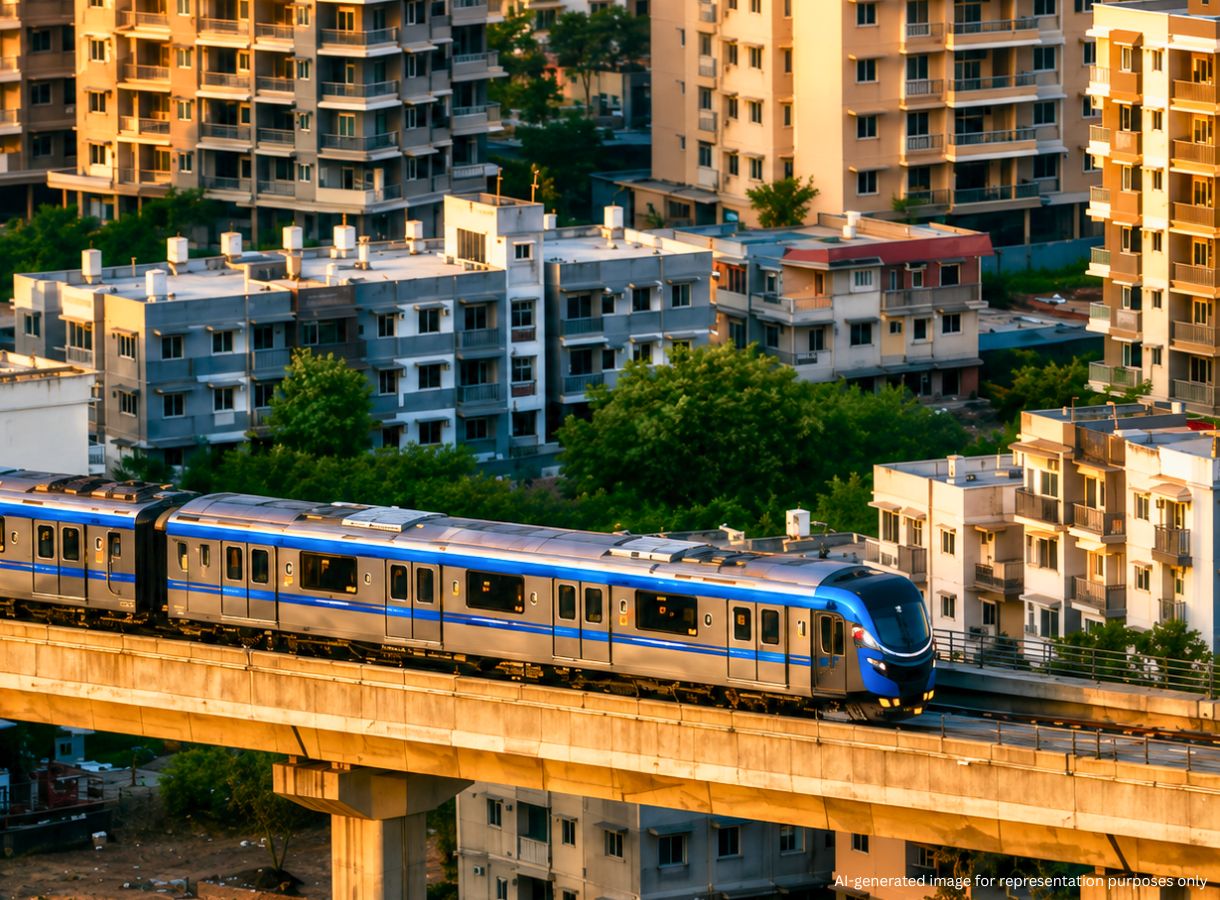
The Bengaluru Suburban Rail Project (BSRP) is a major infrastructure initiative aimed at transforming daily travel across Bengaluru. Once completed, the network is expected to serve nearly 19 lakh passengers every day, significantly reducing pressure on the city’s roads. Officials estimate that this shift to rail-based commuting could remove around 40,000 buses, easing congestion and improving overall mobility.
The BSRP is a large-scale project with an estimated cost of Rs 23,342 crore. It will cover about 148 km and include 57 stations spread across four corridors named Sampige, Mallige, Parijata, and Kanaka. These corridors are collectively branded as “Samparka,” meaning connectivity. The network is designed to integrate multiple modes of transport, linking 17 Metro stations, 22 existing railway stations, and several bus networks to ensure smooth and continuous travel across the city.
A key focus of the project is sustainability and user-friendly design. Stations will include universal accessibility features, making them easier to use for all passengers. In addition, solar panels, rainwater harvesting systems, and other eco-friendly construction practices will be implemented. These measures are expected to reduce nearly 10 million tonnes of carbon dioxide emissions each year while also helping harvest around 22 million litres of water annually.
One of the most important highlights of the project is the interchange at Yeshwantpur. This station is being designed as a five-storey transport hub that integrates suburban rail, Metro, and Indian Railways. It will include two basement parking levels and stacked corridors, where two suburban rail lines will run one above the other. This design is considered a first-of-its-kind for the city and aims to handle high passenger volumes efficiently.
To support frequent train operations, around 24 level crossings will be removed. In densely populated areas where building flyovers is difficult, authorities plan to use innovative engineering methods such as retaining walls and track-shifting techniques. These methods will allow construction work to proceed without major traffic disruption or large-scale displacement of people.
The project has faced delays, but strict timelines have now been set. Corridor 2, connecting Baiyappanahalli to Chikkabanavara over 25.01 km, is expected to open by December 2028. Corridor 4, from Heelalige to Rajanukunte (46.88 km), is planned for completion by mid-2029. Corridors 1 and 3, covering KSR Bengaluru to Devanahalli Airport (49.9 km) and Kengeri to Whitefield (35.52 km), are targeted for March 2030.
Work has already started at key locations like Yeshwantpur, Lottegollahalli, and Hebbal. Land acquisition for Corridor 1 is expected to take about a year, followed by phased utility shifting and construction.
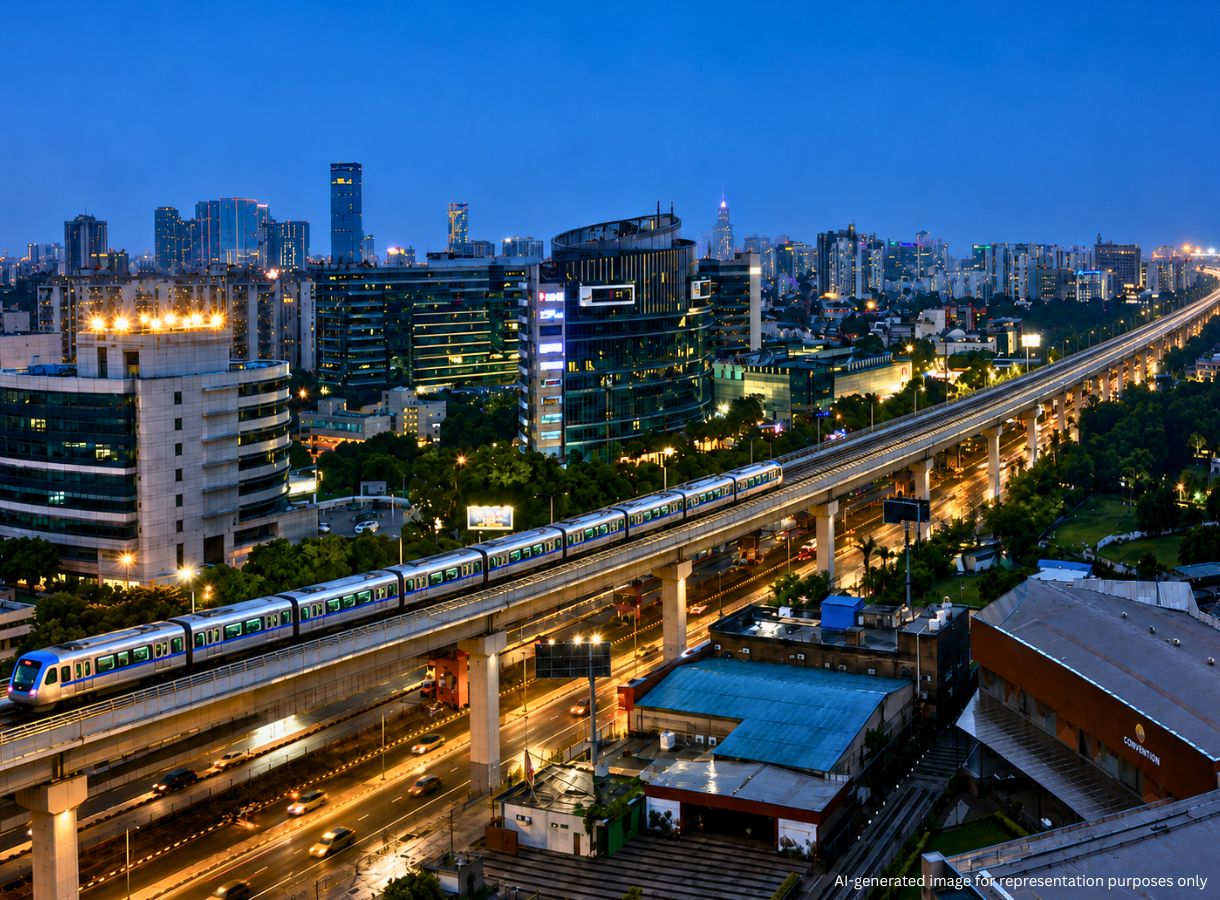
The system will use air-conditioned, metro-like trains. Operations will begin with six-coach trains, with the option to expand to nine coaches as demand grows. Platforms are being built to accommodate this future expansion. At some stations, shorter platforms may be constructed due to space limitations.
Plans for a second phase, extending the network by 146 km to nearby towns, are under consideration. However, fresh surveys will be conducted to assess current demand before final decisions are made. Key hubs like Majestic and Benniganahalli will become major multi-modal centers, integrating suburban rail with Metro and bus systems, creating seamless connectivity for commuters across the region.
1. What is the Bengaluru Suburban Rail Project?
The Bengaluru Suburban Rail Project is a 148 km rail network with 57 stations designed to improve city-wide connectivity and reduce road congestion through faster public transport.
2. When will the Bengaluru Suburban Rail Project be completed?
Corridor 2 is expected by 2028, Corridor 4 by 2029, and Corridors 1 and 3 are targeted for completion by 2030.
3. How many passengers will the Bengaluru Suburban Rail Project serve?
The network is projected to serve around 19 lakh passengers daily once all four corridors become operational.
4. How will the Bengaluru Suburban Rail Project reduce traffic?
By shifting commuters from road transport to rail, the project is expected to remove nearly 40,000 buses from city roads and ease congestion.
5. How will the suburban rail network connect with other transport systems?
The network will integrate with 17 Metro stations, 22 railway stations, and major bus facilities to create seamless multi-modal connectivity across Bengaluru.