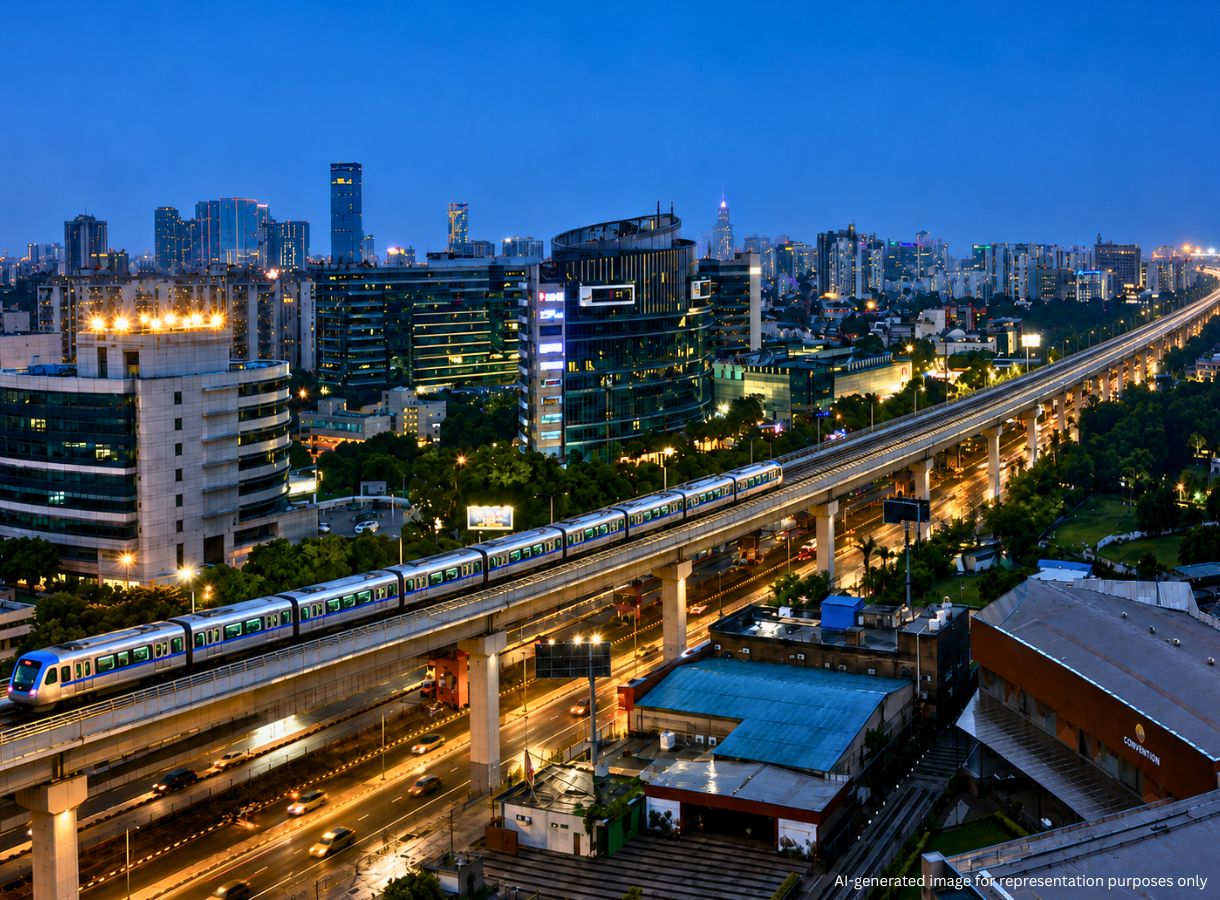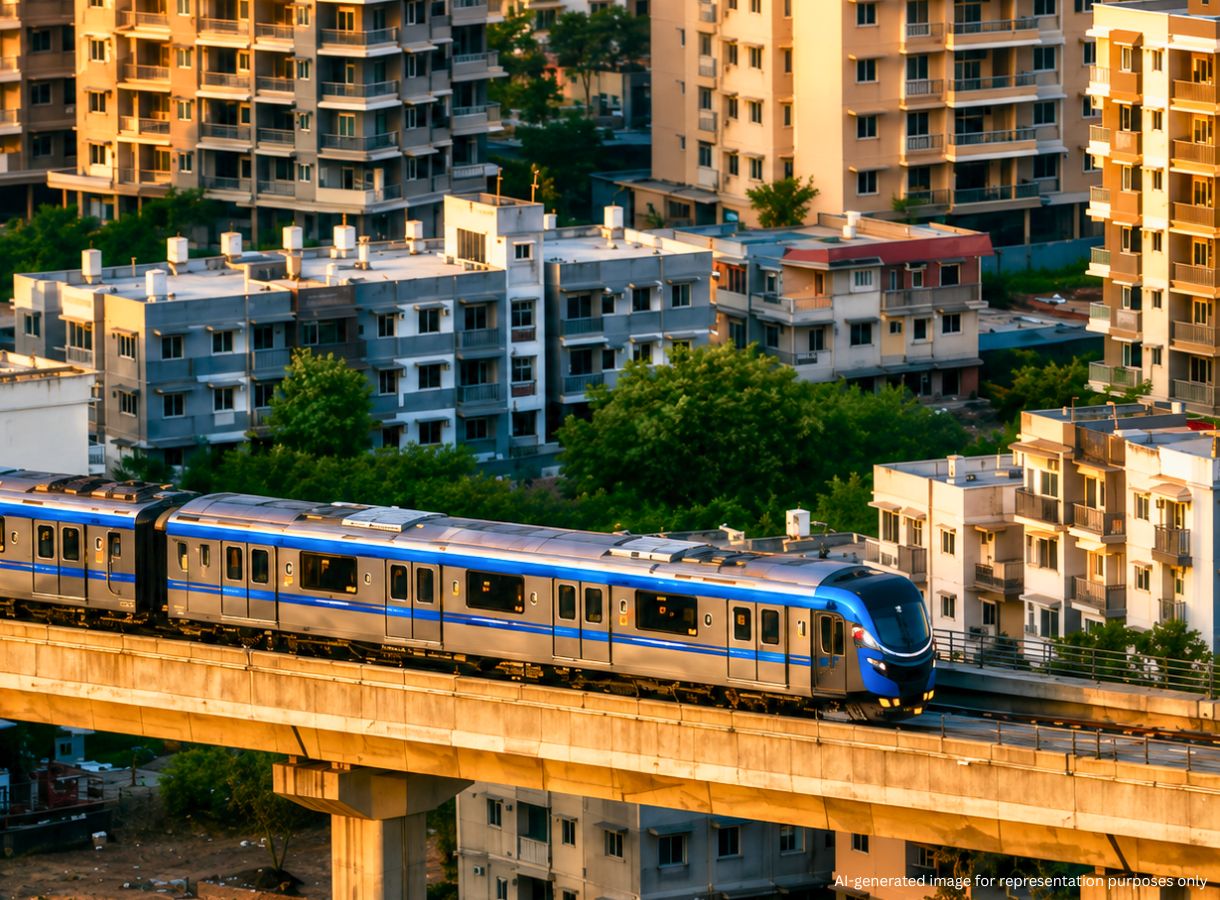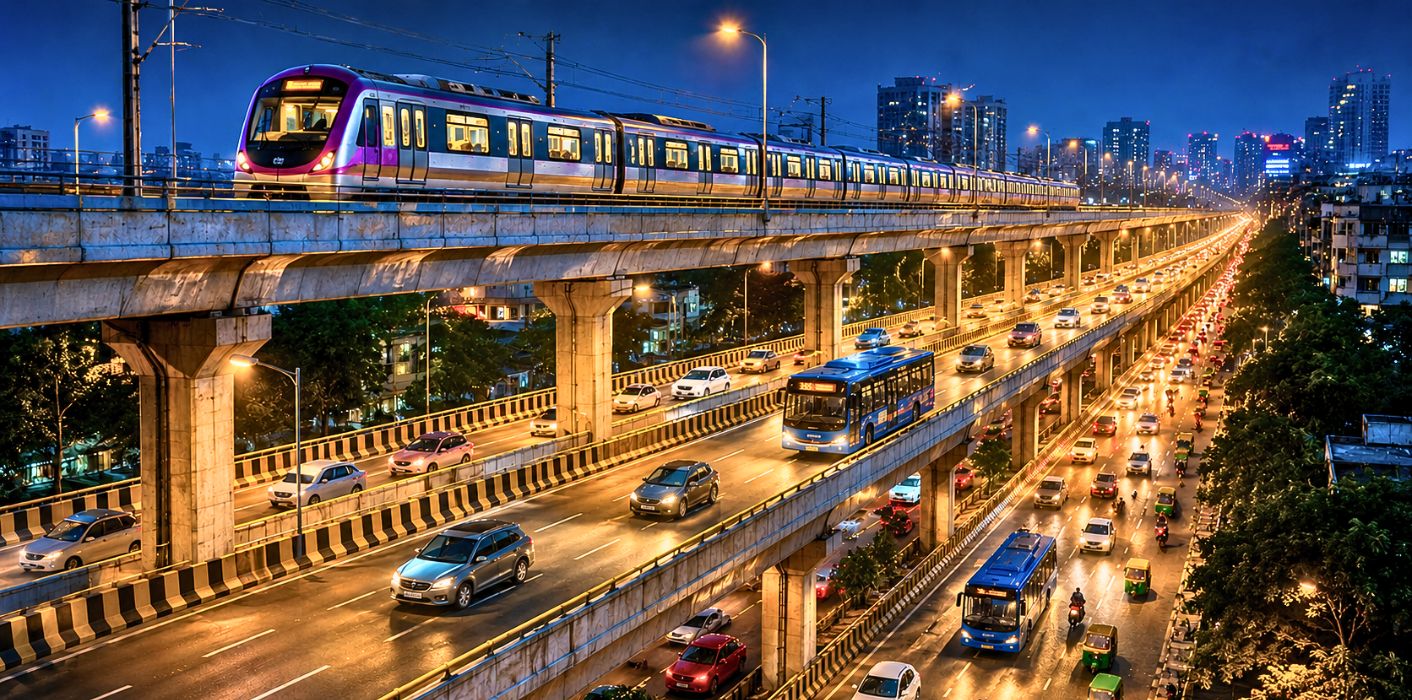
Bangalore Metro Rail Corporation Limited (BMRCL) has proposed a large 37 km double-decker corridor to reduce Bengaluru’s growing traffic congestion. The idea is to use the same road space more efficiently by creating a three-level structure. The ground level will remain for regular traffic, the first level will have a flyover, and the top level will carry a Metro line. This design is expected to improve travel speed and reduce delays across the city.
The project will connect JP Nagar 4th Phase to Hebbal and also stretch from Hosahalli to Kadabagere. These routes pass through busy residential and commercial zones, making them critical for daily travel. Once completed, the corridor will improve north–south movement and shorten travel time between major city areas, including routes leading to the airport.
The total estimated cost of the project is ₹9,692 crore, including land acquisition. The flyover section alone is expected to cost around ₹261 crore per kilometre. Hyderabad-based Aarvee Engineering Consultants prepared the feasibility and design report. The flyover will have four lanes, with two lanes in each direction, and multiple entry and exit ramps. It is designed for vehicle speeds of up to 80 kmph to ensure smoother traffic flow.
This corridor is part of the larger Namma Metro Phase III plan, which covers 45 km of new Metro lines. The double-decker structure will carry the Orange Line on the top level. Although the central government approved the Metro line in August 2024, the addition of the flyover delayed the tender process. The Karnataka government will fund the flyover portion separately.
Since early 2026, the project has moved forward with tenders, land acquisition, and funding. Civil tenders for around 18.58 km were invited in January 2026, with contractor selection expected by the third quarter of 2026. Construction is now likely to begin by late 2026. Due to design complexity, the completion deadline has been extended to April 2032.
Current studies show that areas like Hebbal face heavy pressure, with over 5,600 pedestrians and more than 10,000 vehicles per hour. These numbers are far above road capacity, highlighting the need for such a project to improve safety and reduce congestion.
The corridor is expected to create signal-free travel, improve airport connectivity, and act as a model for future urban transport systems in India. With strong financial viability and planning in place, it represents one of Bengaluru’s most ambitious infrastructure developments.
FAQs
1. What is the Bengaluru double-decker flyover project?
The project is a 37 km multi-level corridor with surface roads, a flyover, and a Metro line designed to reduce congestion and improve travel across Bengaluru.
2. Which locations are connected by the Bengaluru double-decker corridor?
The corridor will connect JP Nagar 4th Phase to Hebbal and also link Hosahalli with Kadabagere through key urban routes.
3. How will the Bengaluru flyover project improve traffic flow?
The project creates signal-free movement with separate layers for local traffic, elevated vehicles, and Metro services to reduce delays and travel time.
4. When is the Bengaluru double-decker corridor expected to be completed?
BMRCL’s revised target for completing the integrated flyover and Metro corridor is April 2032 due to construction and design complexity.
5. Is the project connected to Namma Metro Phase III?
Yes, the double-decker corridor is part of Namma Metro Phase 3 and will carry the Orange Line Metro route above the flyover structure.