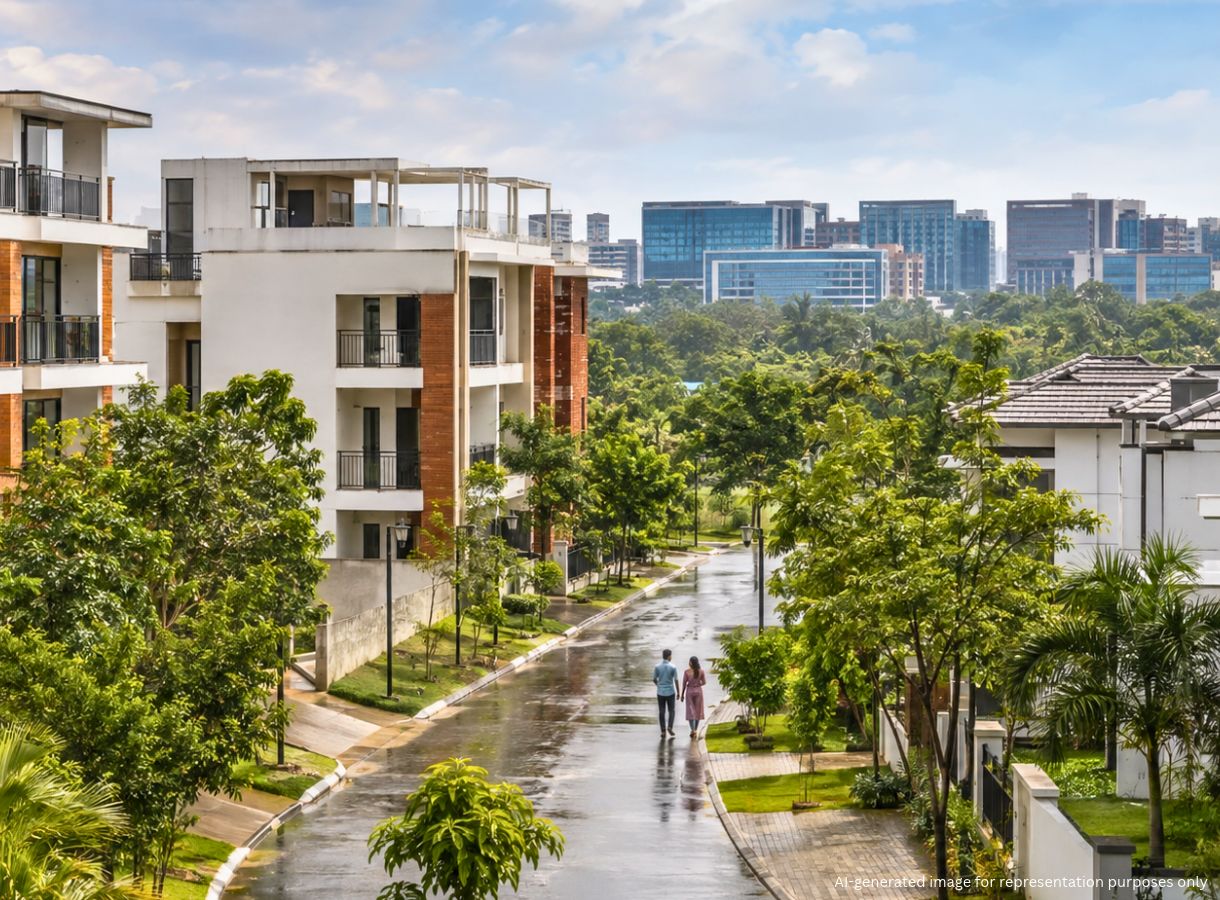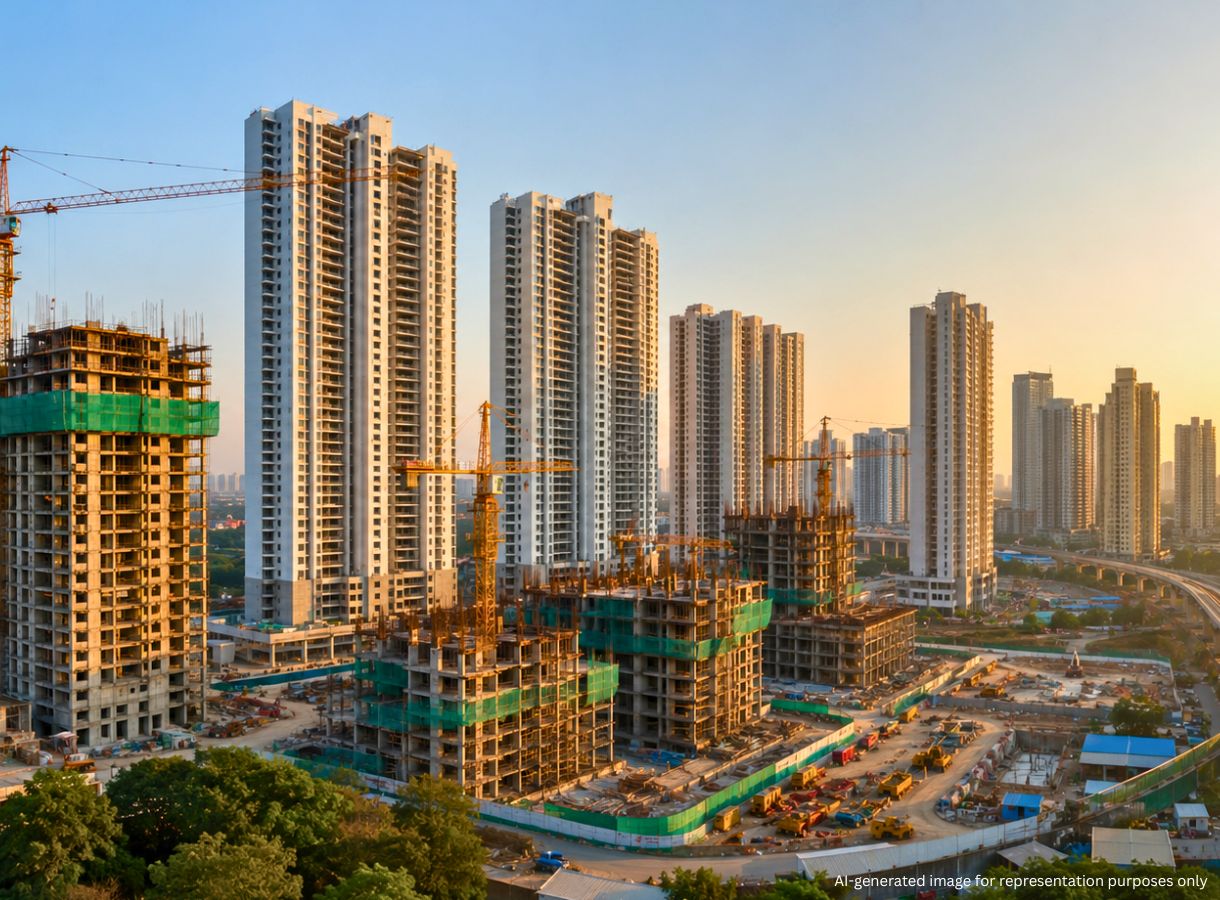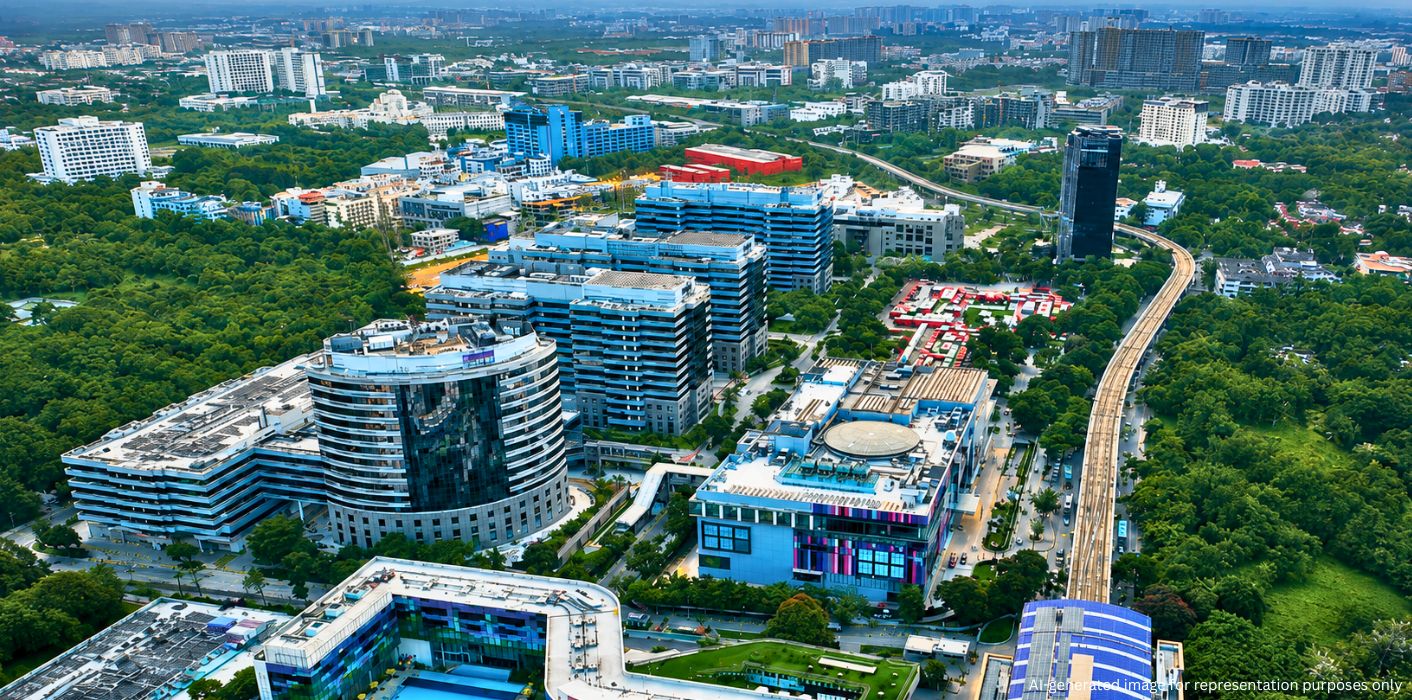
Bengaluru is expanding beyond its traditional technology hubs, with infrastructure increasingly influencing where people live, work and invest. Bengaluru real estate investment is now closely linked to metro expansion, airport connectivity, ring roads and the growth of employment corridors. As transport networks improve, peripheral areas can become more accessible and attractive for both residents and developers. The city's continued expansion of technology companies, Global Capability Centres (GCCs) and employment clusters is also supporting housing demand. Together, these factors are creating a more distributed urban growth pattern. If infrastructure projects progress as planned, their influence could extend well beyond connectivity, shaping property demand, lifestyle choices and long-term investment potential.
The city's real estate expansion was historically concentrated around established commercial and technology districts. That pattern is changing as better connectivity allows emerging locations to participate more directly in Bengaluru's economic ecosystem. Infrastructure-led development is particularly important because accessibility is increasingly judged by commuting time rather than simple distance from the city centre.
Several infrastructure trends are influencing Bengaluru's expanding property landscape:
North Bengaluru is gaining attention from its proximity to the airport and expanding commercial, technology and aerospace activity. East Bengaluru remains strongly supported by established technology clusters around Whitefield and Sarjapur Road, while South Bengaluru benefits from mature social infrastructure, educational institutions and established residential communities. These markets therefore represent different stages of urban development, giving buyers and investors multiple options depending on their priorities.
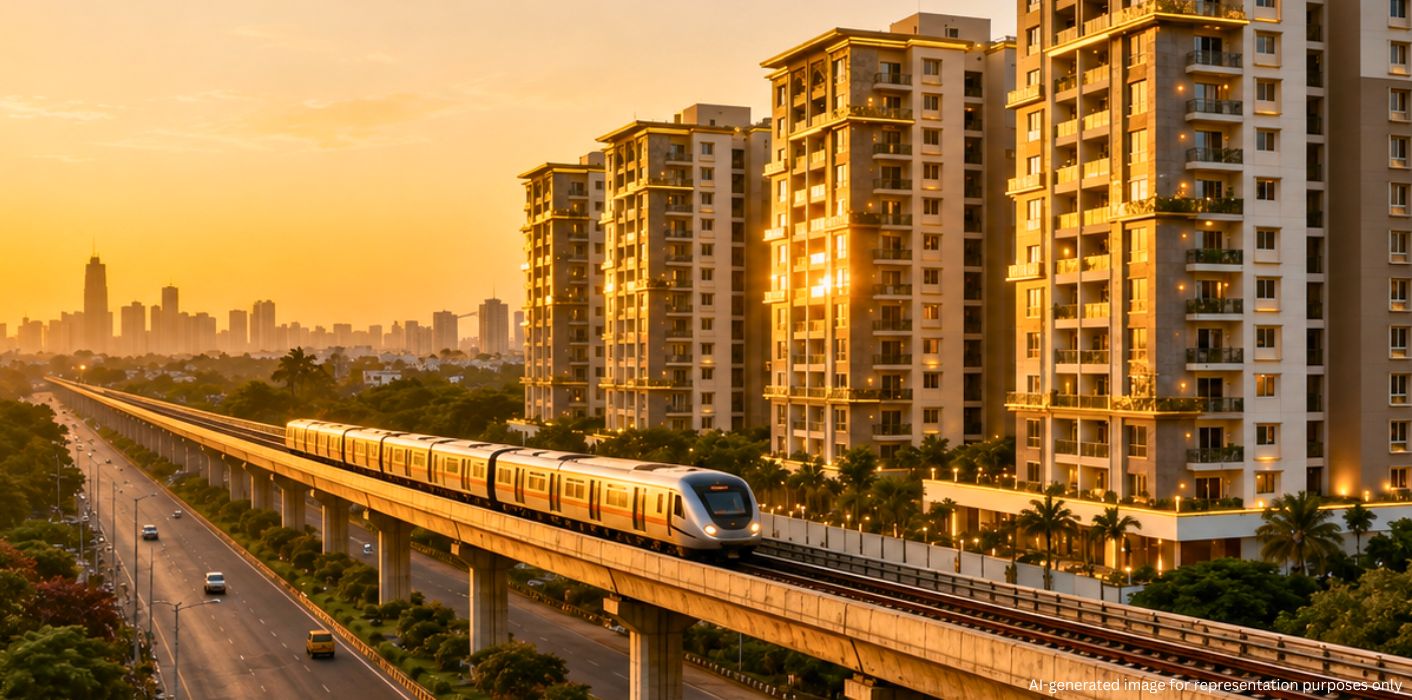
Infrastructure can influence real estate value by improving accessibility, commercial activity and residential demand. Locations that combine planned connectivity with employment growth may become more attractive as surrounding development matures. For Bengaluru real estate investment, the important consideration is therefore not infrastructure alone but the relationship between transport improvements, jobs, social infrastructure and future urban expansion.
Homebuyers are increasingly looking beyond basic residential space and evaluating how a development supports everyday life.
Bengaluru continues to have a strong underlying housing market because residential demand is supported by technology companies, GCC expansion and the movement of skilled professionals into the city. For investors, emerging infrastructure corridors may offer an early-mover opportunity compared with fully matured markets. However, potential appreciation should not be assumed solely from a proposed road, metro line or development plan. Project execution, timelines, surrounding infrastructure and actual employment growth remain important factors.
Bengaluru's next phase of growth is likely to be shaped by the interaction between infrastructure, employment and livability. The city's expansion is creating a wider network of residential and economic corridors rather than concentrating growth in a few established locations. For homebuyers, this can mean more choices across emerging and mature markets. For investors, the focus should remain on locations where connectivity is supported by genuine economic activity and improving social infrastructure. Ultimately, the success of Bengaluru real estate investment will depend on how effectively planned infrastructure is delivered and integrated with the city's wider urban growth.