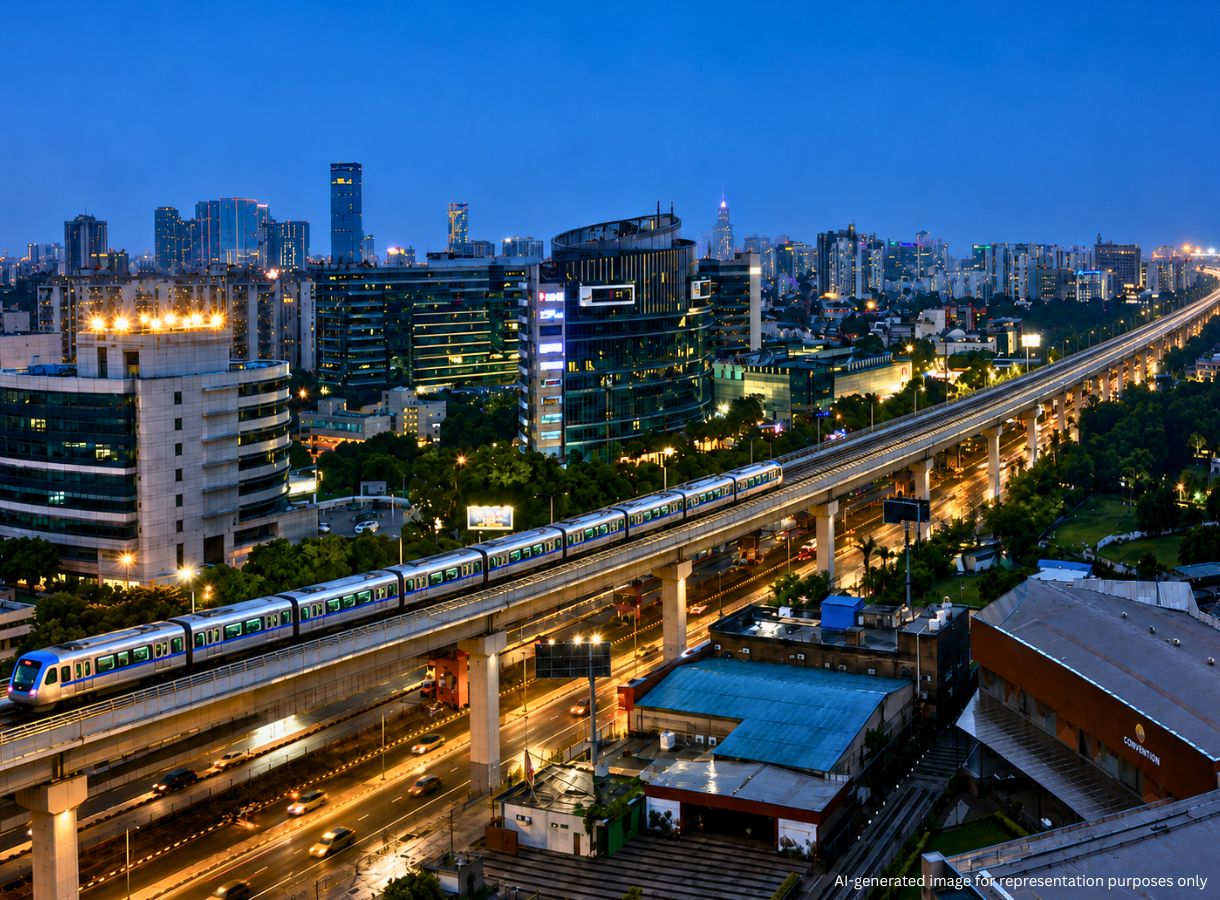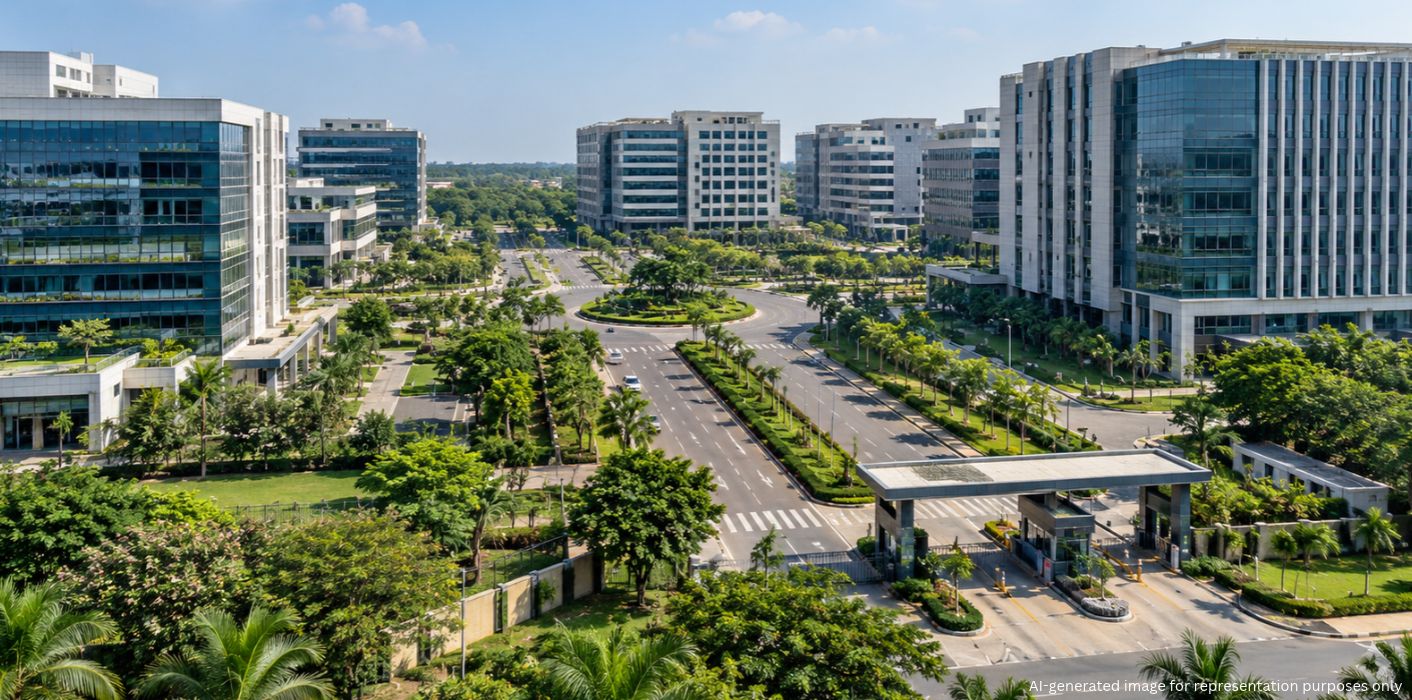
Chennai’s office market is entering a new phase as global companies expand their operations beyond traditional technology services. Global Capability Centres (GCCs) are becoming an important part of this shift, bringing demand for larger workplaces, supporting businesses and nearby housing. The proposed Tamil Nadu GCC Corridor and Growth Plan aims to channel this expansion along three major Chennai routes. With higher development potential and shared infrastructure planned for these areas, the initiative could influence how commercial districts grow.
Tamil Nadu has developed a substantial GCC presence, with Chennai serving as its main centre. The state’s earlier DMK administration prioritised this ecosystem, while the current TVK government is pursuing further investment through memorandums of understanding and additional sector announcements.
Available figures indicate that Tamil Nadu has more than 465 GCCs, accounting for an estimated 10% to 15% of India’s total. Chennai hosts approximately 405 centres, while Coimbatore, Madurai and Tiruchi collectively accommodate more than 60. The state also reportedly has 4.5 lakh professionals ready for GCC roles and added around 65,000 such jobs in FY2025.
The state’s industries portfolio has outlined a growth plan covering three Chennai corridors, with development incentives and infrastructure improvements intended to attract additional global operations.
The exact increase in FSI and the complete implementation framework remain to be established publicly.
The proposed corridors form part of a wider urban development challenge. Greater office density will require transport access, drainage, power, water supply and public services to accommodate growing employment concentrations.
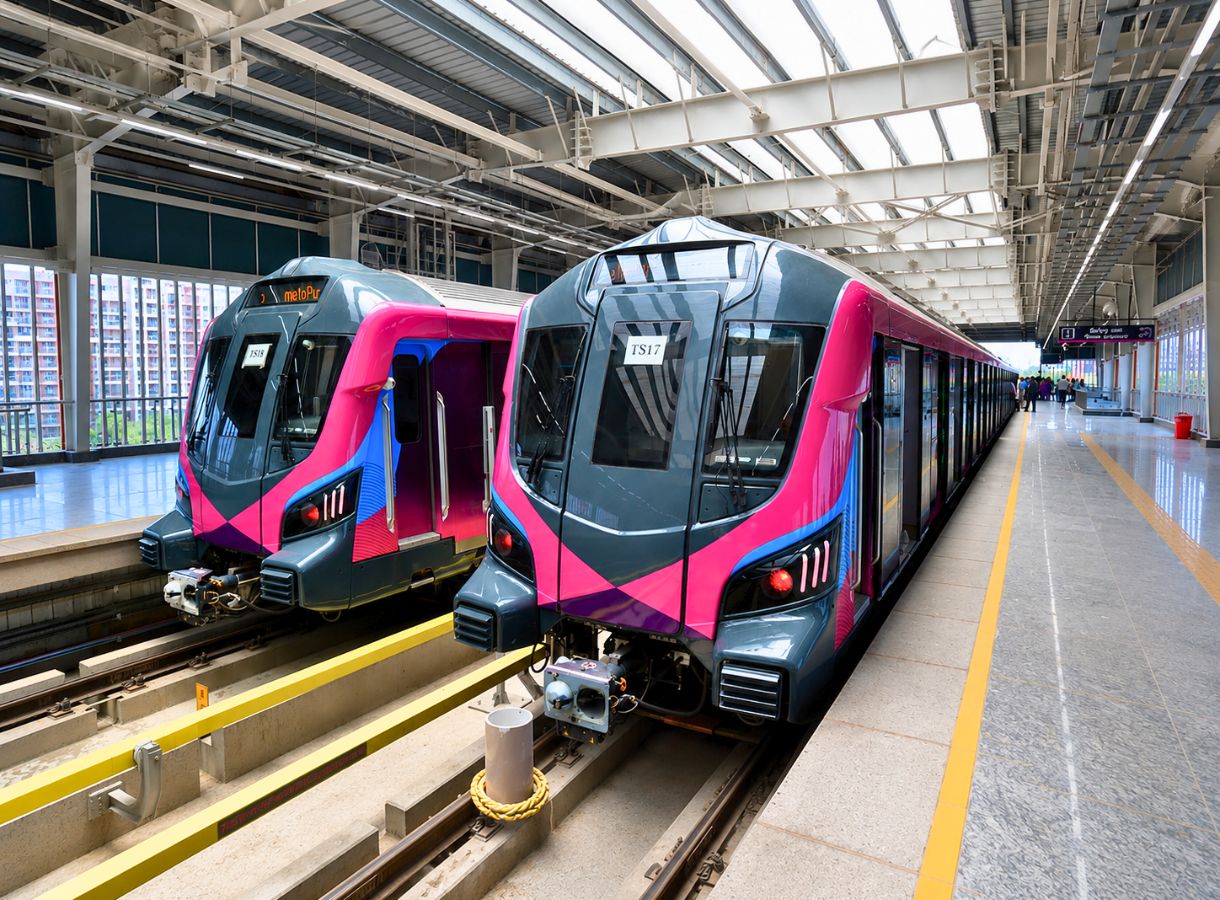
OMR and the Radial Road are linked to planned mobility improvements involving public transport integration, pedestrian movement and road capacity. These connections could help support denser employment districts while reducing dependence on private vehicles.
According to JLL, Chennai’s office leasing reached 8.7 million sq ft in 2025, compared with 8 million sq ft in 2024. Net absorption increased by 15.2% to 5.8 million sq ft. During the first half of 2026, Grade A office demand remained broadly stable, with strong leasing activity in OMR submarkets.
CBRE estimated that Chennai could attract approximately 3-3.2 million sq ft of GCC office leasing in 2025, with the city’s GCC base potentially reaching 450-460 centres by 2030.
Additional GCC activity could support demand for office campuses, rental homes, retail, restaurants, schools and other daily services. Higher FSI may also increase land values by enabling additional development, depending on eligibility, regulations and infrastructure capacity.
The proposed corridor could create opportunities across commercial and residential property markets, particularly where employment growth aligns with infrastructure improvements. Recent announcements include capability-centre proposals linked to the Mount-Poonamallee corridor and a healthcare company’s planned Chennai GCC, expected to begin with 250 jobs.
Higher FSI could improve development potential, but it does not automatically guarantee property appreciation. The outcome will depend on final regulations, site eligibility, transport access and the pace of infrastructure delivery.
Chennai’s GCC expansion could influence more than the supply of office buildings. It may also shape residential demand, business activity and the development of employment corridors across the city. Tamil Nadu’s proposed plan provides a framework for concentrating future growth along selected routes, while the state’s wider GCC network extends into emerging cities. The opportunity lies in coordinating commercial development with the needs of workers and residents.