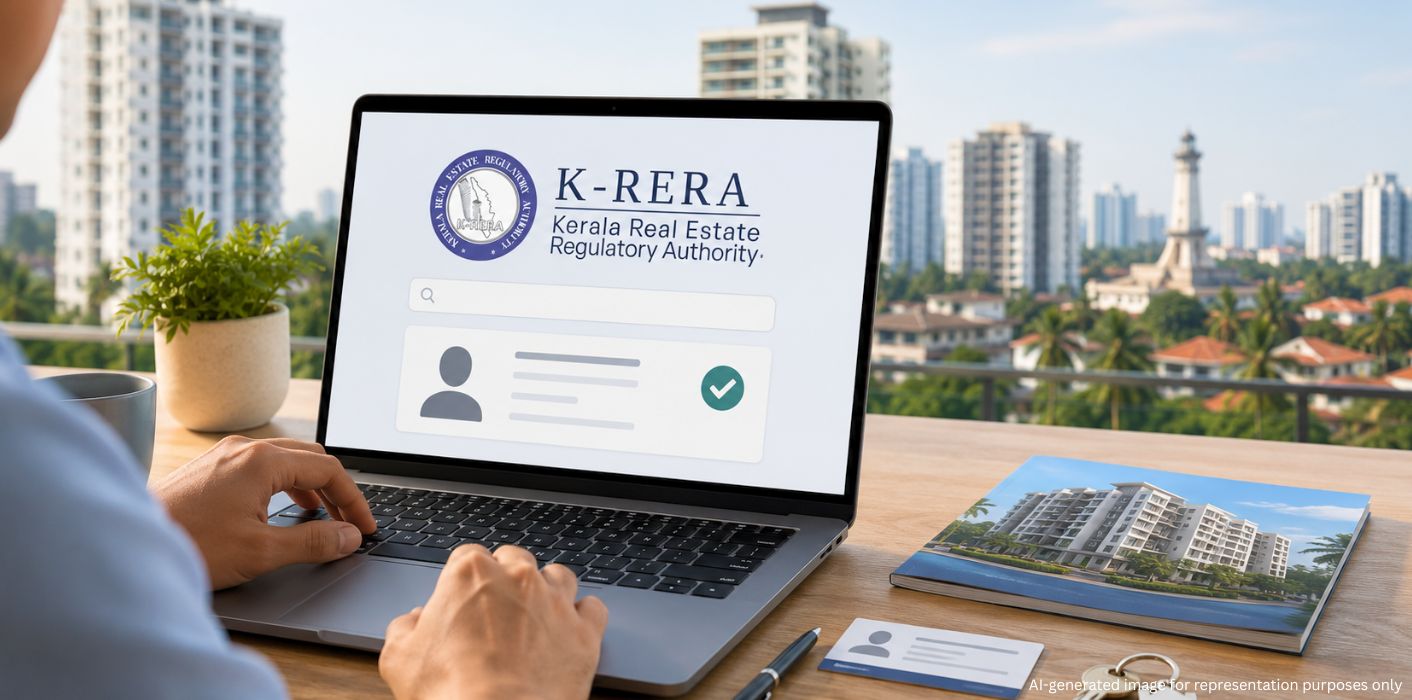
Buying a property is a major financial decision, and understanding the rules governing real estate transactions can help buyers make more informed choices. The Real Estate (Regulation and Development) Act, 2016 (RERA) was introduced to bring greater transparency, accountability and standardisation to India's real estate sector. It establishes regulatory mechanisms for applicable projects and real estate agents, while giving homebuyers access to project information and avenues for grievance redressal.
In Kerala, the Act is implemented through the Kerala Real Estate Regulatory Authority (K-RERA). For prospective homebuyers, understanding how RERA works and knowing how to use K-RERA resources can be an important part of property due diligence.
The Kerala Real Estate Regulatory Authority (K-RERA) is the state's regulatory body for applicable real estate projects and agents under the Real Estate (Regulation and Development) Act, 2016. Its framework is intended to improve transparency, accountability and fair practices in real estate transactions.
For homebuyers, K-RERA provides access to registered project information, promoter details, declared timelines and other disclosures. Checking these records before booking a property can help buyers compare official information with claims made in advertisements, brochures and sales discussions.
RERA generally applies to residential and commercial projects exceeding 500 square metres or having more than eight units, subject to applicable exemptions under the Act. Promoters, developers and real estate agents covered by the legislation must comply with the relevant registration and disclosure requirements.
Before purchasing a property, buyers should therefore establish whether the project falls within the scope of RERA and, where applicable, verify its K-RERA registration rather than relying solely on marketing material.
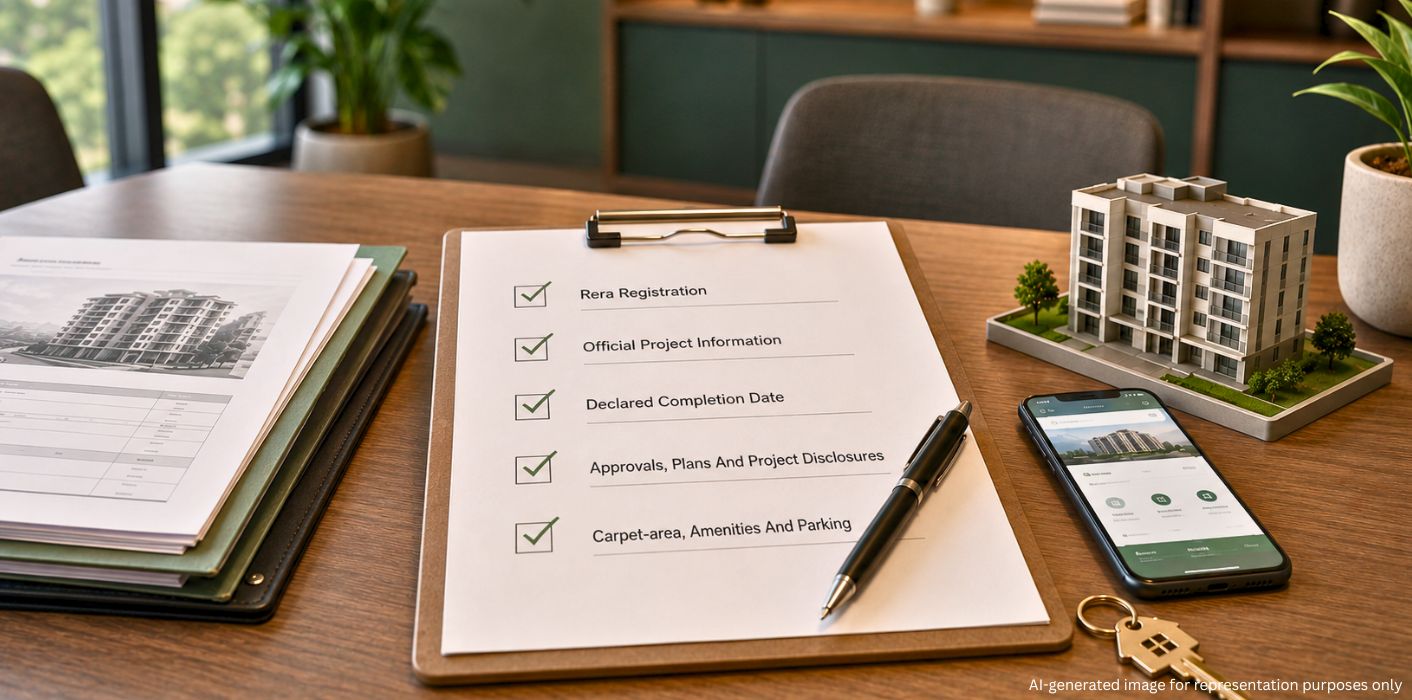
K-RERA records can provide important information for property due diligence. Buyers should review the project's registration number and status, promoter details, location and declared completion date. Available approvals, plans, specifications, carpet-area information, amenities, parking details and disclosed information concerning title or encumbrances should also be examined.
Comparing these records with the developer's representations can help identify discrepancies before making a financial commitment. Buyers should also retain copies of advertisements, payment receipts, agreements and relevant correspondence for their records.
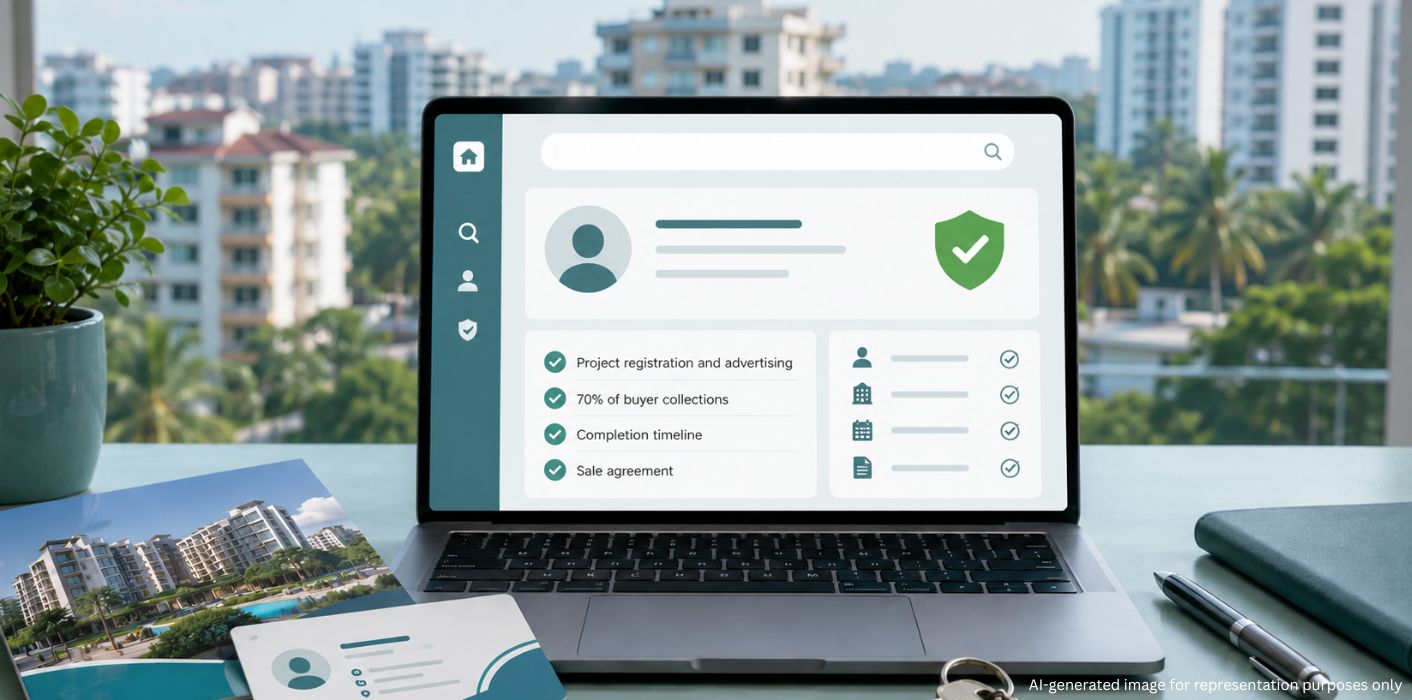
Several RERA provisions are particularly relevant when purchasing a property.
K-RERA strengthens buyer protection by making prescribed project information accessible and establishing regulatory requirements for applicable promoters and agents. It can help buyers identify inconsistencies in project claims, understand declared timelines and access a formal mechanism for addressing eligible grievances.
The framework can provide remedies in situations involving applicable project delays, misleading practices, violations of the agreement for sale and other RERA-related non-compliance. However, K-RERA should form part of a wider due-diligence process rather than being treated as a substitute for independent legal or financial advice.
Eligible complaints may relate to project delays, misleading advertisements, marketing or sale without required RERA registration, violations of the agreement for sale, improper collection or use of project funds and other breaches of the RERA Act or applicable regulations.
Under Section 31 of the RERA Act, 2016, eligible parties can approach the regulatory authority for redressal. Kerala RERA regulations prescribe Form M for complaints before the Authority and Form N for complaints before the Adjudicating Officer.
The supplied regulatory information specifies a ₹1,000 fee for a complaint before the Authority, along with prescribed submission requirements and copies. Buyers should check the latest K-RERA instructions before filing because online procedures and requirements may be updated.
Buyers can independently check whether the real estate agent handling a transaction is registered with K-RERA. The official agent search allows users to look up agents using details such as the agent's name and registration number.
Verifying the agent's information against the official database is particularly useful when an agent is marketing a RERA-registered project. Buyers should not rely solely on registration claims made during the sales process.
| K-RERA Resource | Purpose | Official Link |
| K-RERA Official Portal | Main official website of the Kerala Real Estate Regulatory Authority. Used to access K-RERA information, registered projects, registered agents, announcements, FAQs and other public resources. | K-RERA Official Portal |
| K-RERA Project Search & Explore Projects | Allows prospective buyers to search, discover and filter RERA-registered projects using details such as project name, promoter name, registration number, location, project type, building type, status, amenities and work status. Individual project pages provide additional project information, documents and completion details. | Check Registered Projects & Project Status |
| K-RERA Registered Agents Search | Used to verify whether a real estate agent is registered with K-RERA. It provides search fields for agent name and registration number and lists registered, manually registered and expired agents. | Check Registered K-RERA Agents |
| K-RERA Online Information System | Provides complaint-filing procedures, Forms M, N and L, e-filing guidance, and related complaint guidelines and notices.
| K-RERA Online Information System |
K-RERA gives homebuyers in Kerala a practical framework for making property decisions with greater transparency and confidence. By checking a project's registration, promoter details, declared completion timeline, approvals and other available disclosures, buyers can compare official records with the information provided during the sales process. Verifying the real estate agent and understanding the agreement for sale are equally important. K-RERA also provides a formal mechanism for eligible buyers to raise complaints when applicable obligations are not met. Using the official K-RERA portals and keeping proper transaction records can therefore strengthen the property-buying due-diligence process. Ultimately, the effectiveness of these protections depends on proper compliance, timely action and the specific circumstances of each case.