Buying a home involves evaluating factors such as location, price, amenities, and the developer's reputation. However, one of the most important aspects is the actual usable space inside the apartment. Before the Real Estate (Regulation and Development) Act, 2016 (RERA), many properties were marketed using super built-up area, making it difficult for buyers to compare projects accurately. Today, RERA requires developers to disclose and sell homes based on carpet area, ensuring greater transparency and helping buyers understand exactly how much usable space they are paying for.
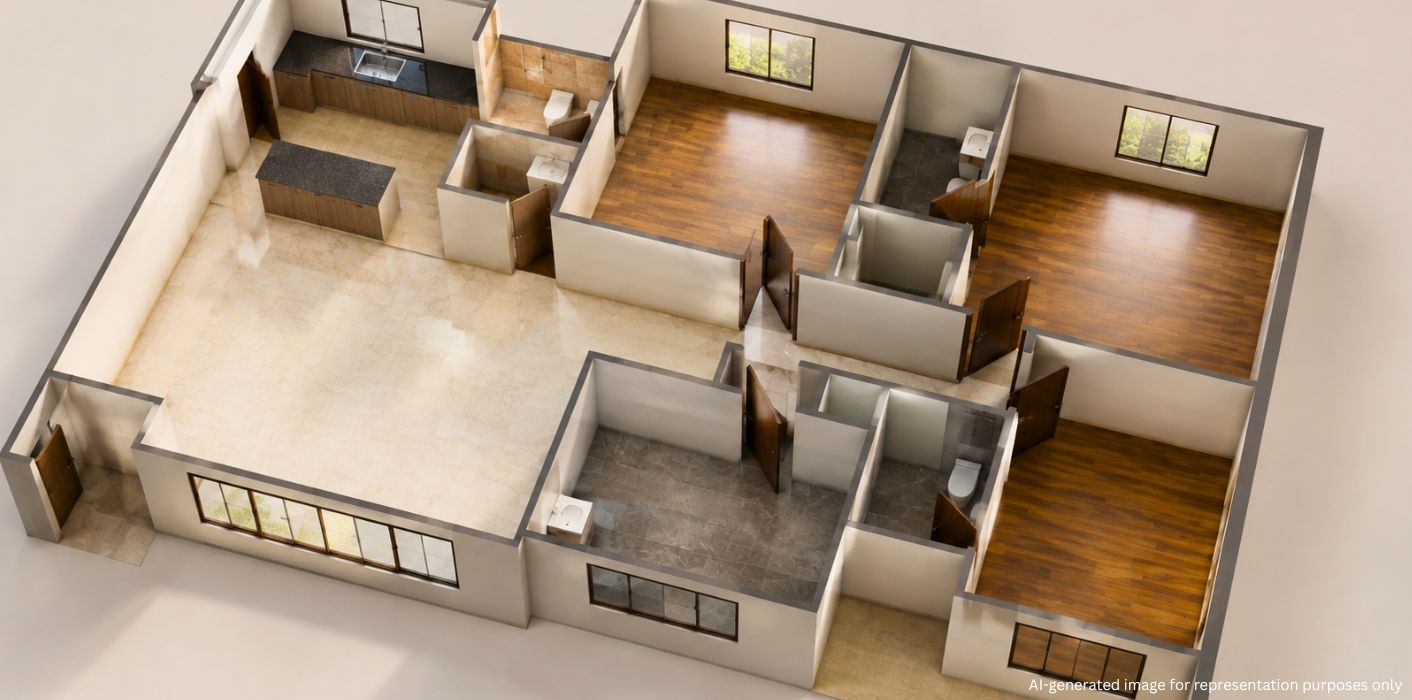
Carpet area is the actual usable floor space inside an apartment where homeowners can live, move around, and place furniture. Under RERA, carpet area is defined as:
"The net usable floor area of an apartment inclusive of the area covered by the internal partition walls, but excluding external walls, service shafts, exclusive balconies, verandahs and open terraces."
In simple terms, carpet area includes the living room, bedrooms, kitchen, dining area, bathrooms, study room, storage or utility room, and internal partition walls. It excludes external walls, balconies, verandahs, open terraces, and service shafts. Since it represents the space homeowners can actually use, carpet area is now the standard measurement for residential property sales under RERA.
Before RERA, developers commonly advertised apartments based on super built-up area, which included a proportionate share of common spaces such as corridors, staircases, lift lobbies, clubhouses, and other shared amenities. As a result, buyers often believed they were purchasing a larger home than the usable space they actually received.
An apartment marketed as 1,800 sq. ft. could provide only 1,280 sq. ft. of actual usable living space. To eliminate such confusion and create a uniform standard, RERA made it mandatory for developers to disclose and sell apartments based on carpet area.
Understanding these three measurements helps buyers compare properties more accurately.
| Area Type | What It Includes |
| Carpet Area | Usable floor area inside the apartment, including internal partition walls. |
| Built-up Area | Carpet area plus external walls, balconies, and attached utility spaces. |
| Super Built-up Area | Built-up area plus a proportionate share of common areas such as corridors, staircases, lift lobbies, clubhouses, and other shared amenities. |
Example
| Area Type | Size |
| Carpet Area | 1,200 sq. ft. |
| Built-up Area | 1,380 sq. ft. |
| Super Built-up Area | 1,620 sq. ft. |
Although the apartment is marketed as 1,620 sq. ft., the homeowner actually gets 1,200 sq. ft. of usable living space.
Many buyers calculate the property's price per square foot using the advertised apartment size. However, this may not reflect the actual cost of the usable space.
Example
Most buyers calculate:
Advertised Price: ₹2.16 crore ÷ 1,600 sq. ft. = ₹13,500 per sq. ft.
Effective Price: ₹2.16 crore ÷ 1,200 sq. ft. = ₹18,000 per sq. ft.
This calculation provides a more accurate understanding of a property's actual value than relying solely on the advertised super built-up area.
Measure the length and width of every usable room and calculate each room's area using: Area = Length × Width
Add together the areas of all usable spaces, including the living room, bedrooms, kitchen, dining room, bathrooms, study room, utility or storage area, and internal partition walls. Exclude balconies, open terraces, external walls, and service shafts. The final figure is the RERA carpet area.
The loading factor represents the percentage of common areas added to the carpet area to arrive at the super built-up area.
Formula : Loading Factor (%) = (Super Built-up Area − Carpet Area) ÷ Carpet Area × 100
Example
A higher loading factor means a larger portion of the property's cost is allocated to shared spaces rather than the apartment's usable area.
Understanding carpet area helps buyers:
Carpet area also plays an important role after the purchase decision. During home loan processing, lenders assess the property's market value, and apartments with efficient layouts and larger usable areas are generally viewed more favorably. Property tax calculations vary across municipalities and may be based on built-up area, annual rental value, unit area value, or capital value. Although carpet area may not directly determine the tax amount everywhere, maintaining accurate records of the carpet area, approved building plans, and sale agreement helps avoid future disputes.
Before finalising a purchase, buyers should ensure the carpet area mentioned in the RERA registration, Agreement for Sale, approved building plan, allotment letter, and possession documents is consistent. Comparing these details with the developer's marketing brochure and seeking professional advice if discrepancies arise can provide additional assurance.

Some common mistakes include:
Carpet area is one of the most important measurements to consider when buying a home because it represents the space that homeowners can actually use. While location, amenities, connectivity, and construction quality remain important, understanding carpet area provides a clearer picture of a property's true value. Comparing apartments based on carpet area, checking the loading factor, and verifying RERA-approved documents enables buyers to make informed decisions and invest with greater confidence.