Affordable housing has become one of the biggest challenges for growing cities around the world. As urban populations continue to rise, the demand for safe and reasonably priced homes is increasing much faster than traditional construction can manage. Long construction timelines, rising material costs, and labor shortages often make housing projects slower and more expensive than expected.
In response to this growing concern, modular construction is emerging as a practical and forward thinking solution. By offering faster construction, better efficiency, and more sustainable building practices, modular housing is gradually changing how affordable homes are designed and delivered.
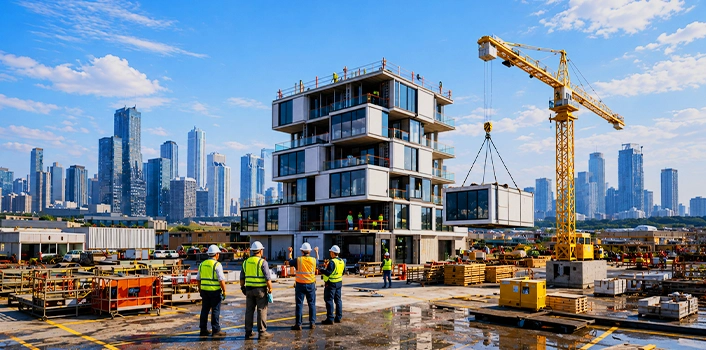
Modular housing is a construction method where different sections of a home are built inside a factory controlled environment. These sections, often called modules, are then transported to the final location and assembled on site to create a complete building.
Although the process is different from conventional construction, modular homes are designed to meet the same building standards and safety regulations as traditionally built homes. The approach allows builders to maintain consistency while also offering flexibility in design and layout.
Because much of the work happens indoors, construction can continue without interruptions caused by weather conditions. This makes the process more reliable and significantly faster.
The growing interest in modular construction comes from its ability to solve several common challenges in affordable housing development. One of the biggest advantages is speed. Since site preparation and factory production can happen at the same time, projects are often completed much earlier than conventional buildings.
Another major benefit is cost control. Factory based production helps reduce material waste and improves efficiency during construction. Fewer delays and reduced labor requirements also contribute to lower overall development costs.
Sustainability is another reason modular housing is becoming more popular. Controlled manufacturing environments help reduce unnecessary waste, while efficient transportation and resource management lower the environmental impact of construction activities.
Quality control also improves through this process. Factory settings allow builders to maintain consistent standards, resulting in structures that are durable, precise, and carefully assembled.
Many cities are already exploring modular construction as a way to address housing shortages more effectively. Residential developments using modular techniques are being built to support families, working professionals, and individuals in need of affordable living spaces.
The ability to complete projects faster means communities can respond more quickly to housing demands. This is especially important in areas where rising rents and limited housing supply continue to create pressure on residents.
Modular construction is also helping transform underused urban spaces into functional residential neighborhoods. As awareness grows, more developers and city planners are beginning to see modular housing as a long term solution rather than a temporary alternative.
Despite its growing popularity, modular housing still faces several challenges. Transportation can be difficult because large modules must be moved carefully from factories to construction sites. Distance limitations can sometimes affect project planning and logistics.
Building approvals and local regulations can also slow down adoption in certain regions. Different construction codes and approval systems may create delays before projects begin.
Public perception remains another challenge. Some people still associate modular homes with older mobile housing concepts and may question their quality or durability. In reality, modern modular buildings are designed using the same materials and standards as many traditional homes.
As cities continue searching for efficient housing solutions, modular construction is steadily becoming part of the conversation about the future of urban living. Its combination of speed, affordability, sustainability, and quality makes it a strong option for meeting modern housing needs.
While traditional construction will continue to play an important role, modular housing offers a smarter and more adaptable approach for communities facing growing demand. As technology and awareness continue to improve, modular construction may soon become a key part of creating accessible and affordable homes for the future.
1. What is modular housing?
Modular housing is a construction method where homes are built in factory made sections and assembled at the final location.
2. Why is modular construction important for affordable housing?
It helps reduce construction time, material waste, and labor costs, making housing projects more efficient and affordable.
3. Are modular homes durable?
Yes, modular homes are built to meet the same safety and quality standards as traditional buildings.
4. Is modular housing environmentally friendly?
Modular construction reduces waste and improves resource efficiency, making it a more sustainable building method.
5. What challenges affect modular housing growth?
Transportation limits, approval processes, and public misconceptions are some of the common challenges slowing wider adoption.