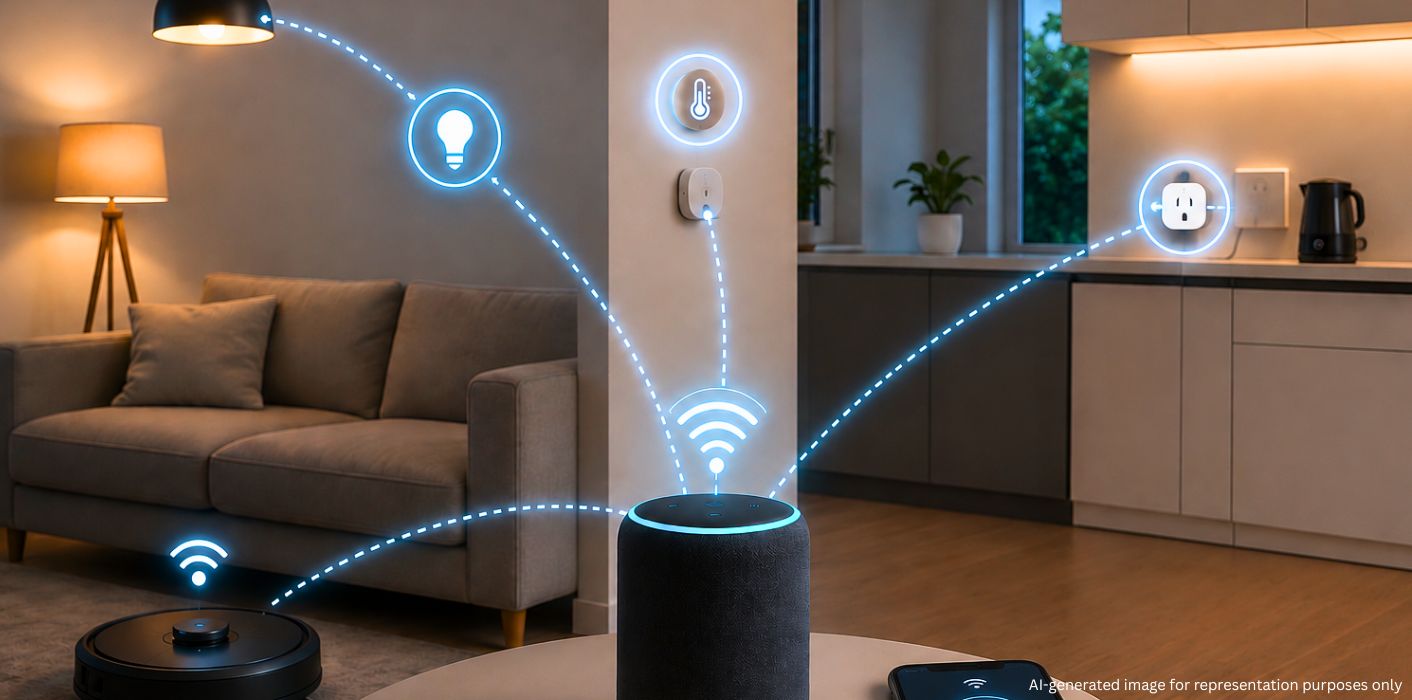
As everyday routines become more connected, Indian homes are increasingly using technology to handle simple household tasks with less manual effort. Smart home devices in India can automate lighting, appliances, security and comfort while allowing homeowners to control them through apps, sensors or voice commands. For Indian homes, wireless and retrofit-friendly options suit existing apartments, while wired automation can be considered during construction. Choosing devices compatible with Indian electrical standards, existing wiring, local support and a suitable ecosystem is equally important.
The most useful options for an Indian home include:
A hub or gateway can coordinate compatible devices so that different functions work together instead of being controlled separately. For example, a single bedtime routine could switch off selected lights, adjust bedroom lighting, close curtains and activate the door lock. Matter-compatible products can also help improve cross-platform compatibility as the standard becomes more widely adopted. For smaller setups, Wi-Fi devices can offer a straightforward starting point, while more advanced systems may use other connectivity standards.
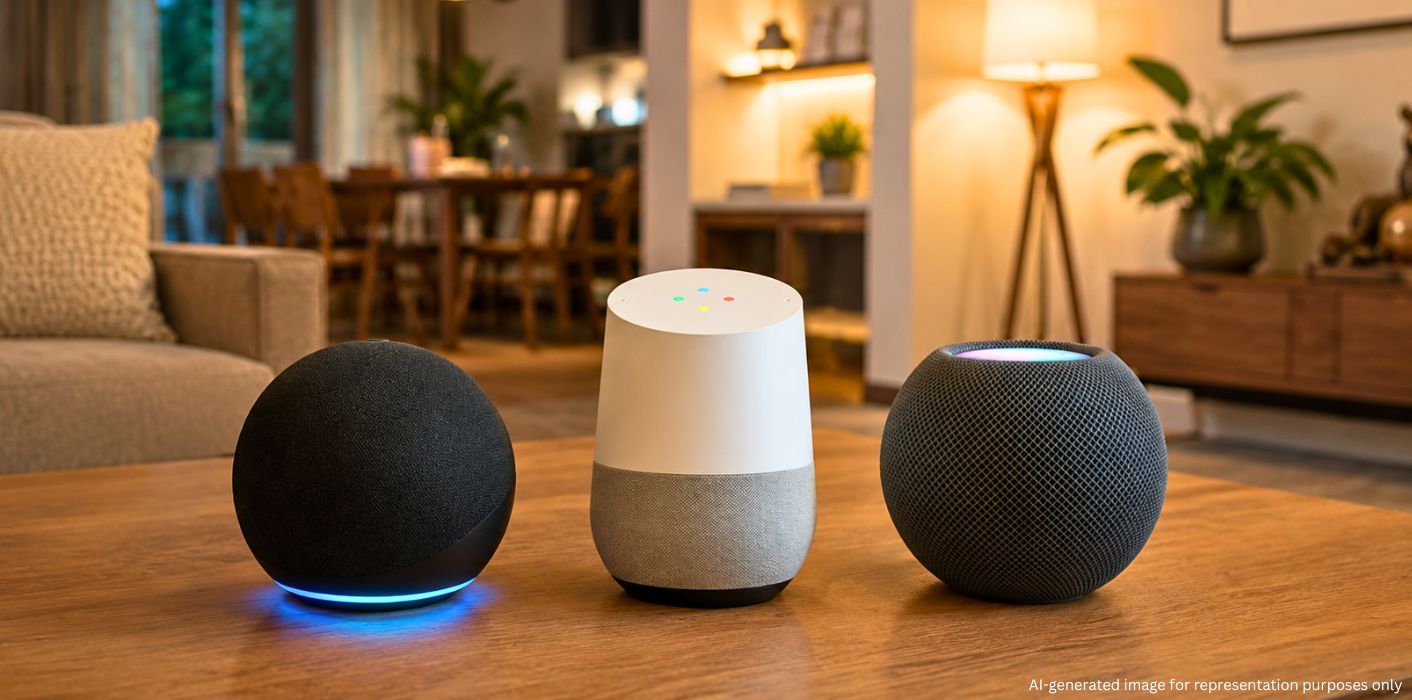
The voice assistant or home platform you choose can influence which smart devices work together smoothly. For Indian homes, Amazon Alexa, Google Home and Apple Home are the three main options to consider, although their strengths differ.
Smart home devices in India can address several practical household requirements. Scheduled lighting and appliance control can reduce unnecessary operation, while automated curtains can limit direct sunlight entering rooms during hot periods. Security devices provide another important benefit. Cameras, doorbells and smart locks can help homeowners monitor entrances, manage access and receive alerts while away from home. Gas and water leak sensors can further add an early-warning layer for potentially costly household problems.
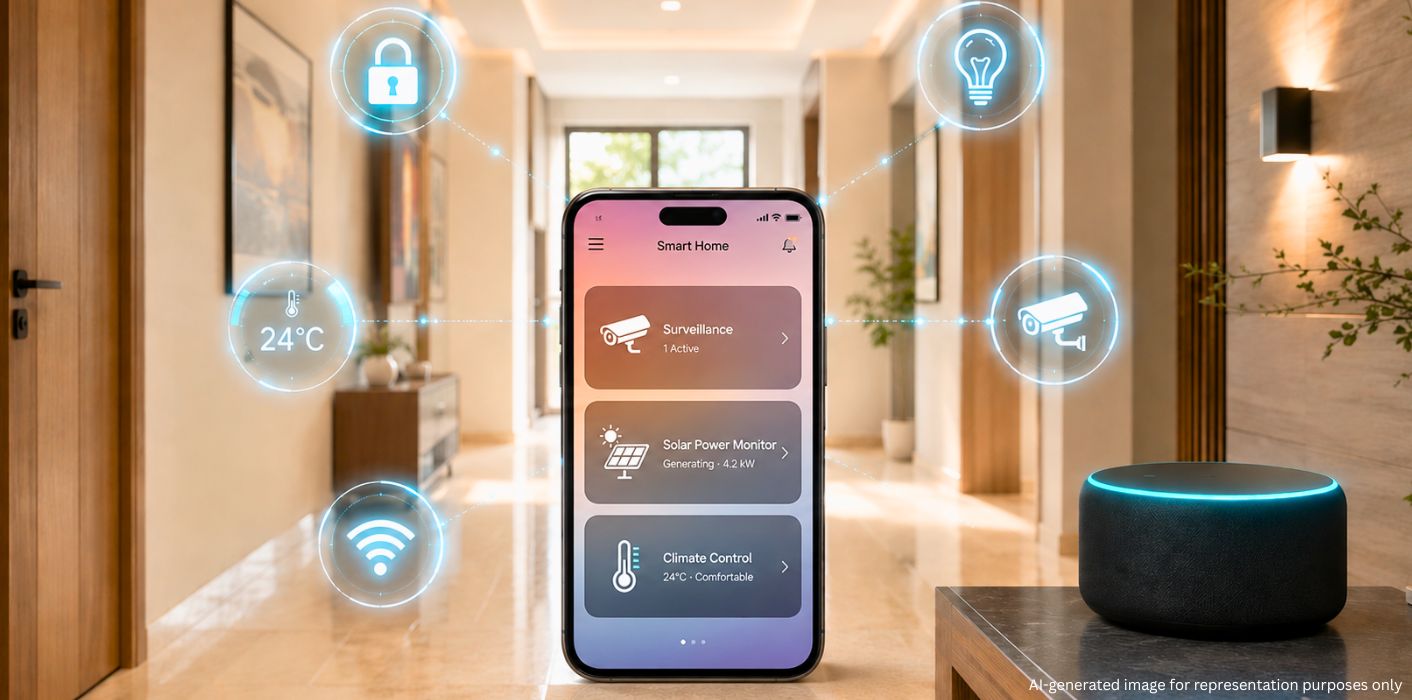
Compatibility should come before features. Devices should support India's 220 - 240V, 50Hz electrical system and suit the home's existing wiring and switchboard configuration. It is also useful to check whether essential functions continue through local control when the internet connection is unavailable.
The wider ecosystem matters as well. Devices that cannot communicate with one another may result in several separate applications and limited automation. Buyers should also consider installation requirements and the availability of after-sales support in India.
Smart home technology does not have to begin with a complete automation package. A homeowner can start with a smart plug or retrofit switch, add security devices, and gradually introduce lighting, curtains, sensors and other connected appliances as needed.
The value of smart home devices in India lies less in adding technology for its own sake and more in solving familiar household problems. When selected around electrical compatibility, convenience, safety and interoperability, even a modest setup can make daily routines easier.