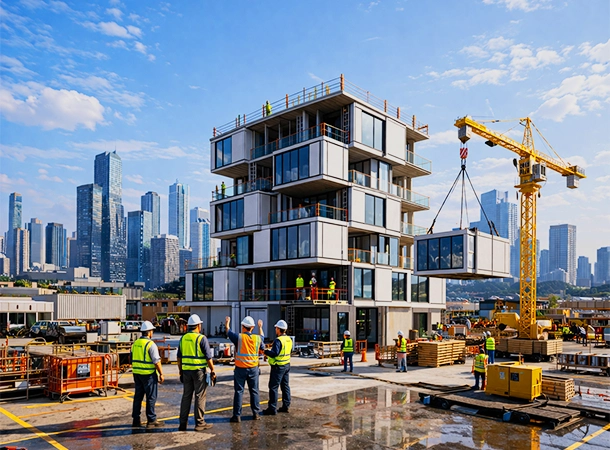
As India's cities expand and infrastructure projects multiply, construction methods must balance speed, quality and resource efficiency. Prefabricated construction addresses these demands by shifting much of building production from construction sites to factories.
With standardized components, modular systems and digital manufacturing gaining attention, prefabrication could play a larger role in India's housing, commercial and infrastructure development, depending on investment, skills and execution capacity.
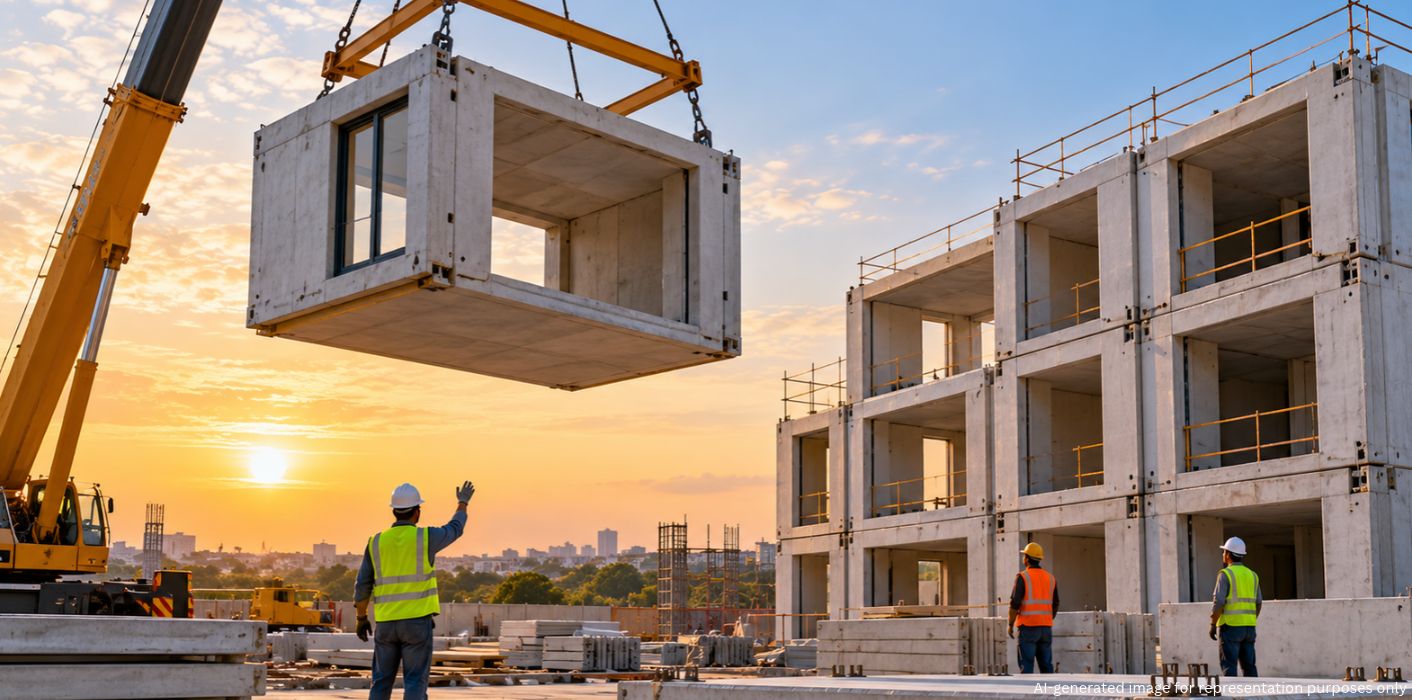
Prefabricated construction involves manufacturing building components or complete modules in factories before transporting and assembling them on-site. The process covers design, production, quality inspection, transportation and installation. Unlike conventional construction, it allows factory manufacturing and foundation work to progress simultaneously, potentially reducing delays and improving coordination.
Four main systems serve different project requirements:
Structural components include load-bearing and non-load-bearing walls, columns, beams, floor and roof slabs. Other elements include cladding, balconies, kitchen and bathroom modules, and bolted, welded, grouted or mechanical connection systems.
Applications span residential developments, high-rise apartments, mass housing, student accommodation, offices, IT parks, hotels, retail complexes, warehouses, factories and cold storage facilities. Infrastructure uses include metro and railway stations, bridges, flyovers and utility buildings, while public-sector applications cover hospitals, schools, government facilities and defence buildings.
Prefabrication can improve project delivery while reducing the amount of work performed at construction sites.
Actual savings depend on design, transportation, manufacturing capacity and installation conditions.
India's prefabrication sector remains relatively small, but housing demand, urbanization and infrastructure investment could accelerate adoption.
Key growth drivers include:
Further growth will depend on private investment, supportive policies, workforce skills and the ability to maintain competitive project costs.
Material choices and manufacturing technology are shaping the sector's development.
| System or technology | Role in prefabricated construction |
| Precast concrete | Remains a major option because of its strength and adaptability to Indian requirements. |
| Engineered wood | An emerging growth category, supported by design flexibility and sustainability considerations. |
| Steel, PEB and LGS | Widely relevant to industrial and commercial buildings. |
| Building Information Modeling (BIM) | Improves design coordination and planning. |
| Automation and digital project management | Support manufacturing accuracy, production efficiency and installation coordination. |
Larger, technology-driven companies may gain advantages through manufacturing capacity and integrated project delivery. However, the industry must also address skills shortages and supply-chain coordination.
Prefabricated construction could become a more established part of India's residential, commercial and infrastructure sectors as developers seek faster delivery, consistent quality and improved resource efficiency. Its long-term contribution will depend on investment, technical capabilities, suitable policies and effective coordination between factory production and site installation. Adoption is likely to progress at different rates across sectors and project types.